 A small business, especially when it is just starting out, almost always has a built-in disadvantage when compared to larger companies in the same market. Bigger, more established companies simply have more resources at their disposal. It is vital that new companies work not just harder, but also smarter than the others, taking advantage of every opportunity and making the most of what resources they do have. That certainly includes capitalizing on the opportunities afforded by cloud computing technology.
The cloud is a relatively old idea, but it is only recently that it has been feasible to put it into practice. At its most fundamental level, it’s about making computing services and data accessible via the public Internet from anywhere with a connection.
Traditional Web Hosting vs. the Cloud
Because of its decentralized access to data and the way that the hardware and resources are owned and maintained by an outside company, the cloud can seem a lot like traditional web hosting. It’s true that there are similarities, but there are a few key differences.
- All the services, not just the hardware, are managed by the provider.
- Services are available as they are needed, and don’t have to be arranged for well in advance.
- The space provisioned is expandable or retractable as needed.
Best for Small Businesses
There are several reasons cloud computing provides a safety net for small businesses.
- OpEx, Not CapEx. The cloud turns telecom and computing resources into an operating expense rather than a capital investment. Instead of sinking large sums of money into hardware that will rapidly devalue then hiring and training the staff to run it, all of that becomes someone else’s problem.
- Mobility. Because the data is accessible from anywhere with an Internet connection, a small company’s workforce becomes empowered to do their jobs from pretty much anywhere. This can lead to astonishing increases in productivity, especially from staff whose duties already require lots of travel.
- Security. Cloud service providers use state of the art encryption and multi-factor authentication to ensure that only authorized people can access sensitive data.
- Scalability. It is the goal of every small business to become a big business, and cloud computing services can grow along with any company as it does exactly that. Storage and bandwidth can easily be increased to accommodate increased data flow, and provisioning new services to add newly necessary functionality is trivial.
It used to be that new, smaller companies couldn’t compete with bigger, more established businesses, but thanks to cloud computing that is no longer the case. With the flexibility, scalability, and affordability of the cloud, even the smallest and newest of businesses can have the benefit of a cutting edge infrastructure and IT department from the start.
 Enterprise IT today is changing dramatically. Shifts in device management, networking, and storage are just a few areas of transformation, with many others in the infancy of their evolution. A few trends have begun to rise to the top and are predicted to be significant movers in the field of enterprise storage in 2016.
 Most businesses are moving towards adopting the cloud in some form, either public, private, or a hybrid. However, before deploying the cloud, businesses should know what cloud management tools will best suit their goals and market strategy.
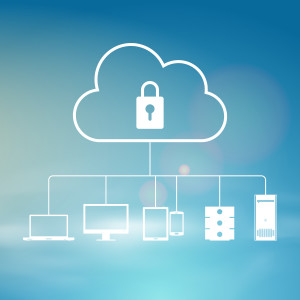 Having the right cloud security is of paramount importance. With maximum security protocols in place, a company’s most vital information can be protected from unscrupulous hackers and foreign intrusion. Clients can also monitor who accesses their shared and private data and ensure that documents are safe from cyber criminals.
 Hybrid cloud adoption continues to soar at alarming rates. In fact, Business Word recently reported that hybrid cloud usage will triple in growth by 2018. This is due to the ongoing demand of companies seeking better reliability, availability, and security for file storage and data sharing. While elasticity is also playing a key role in centralized and streamlined cloud communications, providers are also offering manageable cost structures that effectively meet client budgets and financial concerns.